
Where advanced manufacturing programs connect, collaborate and power the factories of tomorrow
The Center for Advanced Manufacturing and Technology (CAM-T) at Clover Park Technical College is more than a learning space – it’s a hub where the digital and physical worlds intersect and Industry 4.0 comes to life. Here, students work alongside faculty and industry partners to discover how advanced materials, smart machines, software and networks power the factories of tomorrow. Through hands-on learning, they turn classroom theory into real-world application.
At CAM-T, Industry 4.0 is more than a buzz phrase – it shapes how our programs connect and collaborate, giving students the opportunity to apply their skills across multiple disciplines.
How the programs connect
Each program at CAM-T represents part of a larger industrial system. On their own, they build expertise. Together, they show how modern manufacturing actually functions — from material to product, from data to decision.
- CAM-T’s six programs interact in a shared, applied learning environment
- Students tackle challenges from different angles guided by common Industry 4.0 principles
- Dotted lines of collaboration link the programs: programming supports mechatronics, mechatronics works with composites, and testing ensures quality across every system
CAM-T Industry 4.0 Programs
Operations Management
Build supervisory and management skills to tackle real-world business problems — forecasting, quality management, lean concepts and applied industry solutions.
Manufacturing Engineering Technologies
Robotics, CNC machining, process modeling and lean practices to optimize smart, data-driven production.
Mechatronics
Industrial robots, PLCs and sensor networks integrated across automated, interconnected manufacturing environments.
Nondestructive Testing
Ultrasonic, radiographic and magnetic particle inspection using predictive analytics to maintain quality without halting production.
Computer Programming
Software development and digital infrastructure connecting machines, data and people in modern manufacturing systems.
Network Operations & Systems Security
Secure networks and infrastructure safeguarding the connected systems that power Industry 4.0 environments.
Step into the lab environments
Six programs, one connected facility. Every lab is built to mirror real industrial floors — the same machines, controls, and inspection tools students will use on the job.

.jpg)
.jpg)
.jpg)
.jpg)
.jpg)
.jpg)
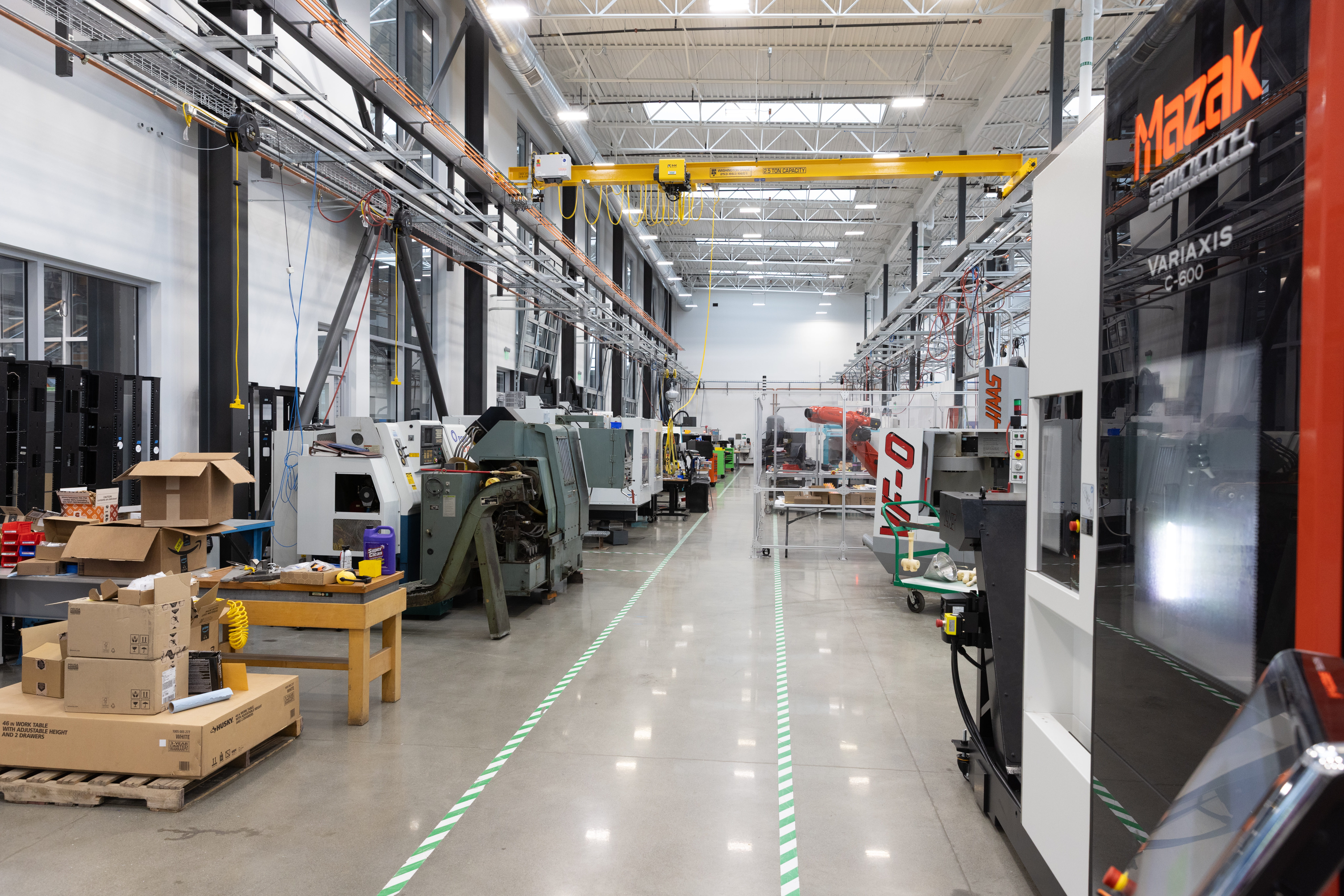
Manufacturing Engineering Technologies
The Manufacturing Engineering Technologies lab is a high-bay production environment where students work with a large variety of Digital, Additive, Robotic, Subtractive, Fabrication, and Tool & Die machines, processes, and workflows.

.jpg)
.jpg)
.jpg)
.jpg)
.jpg)
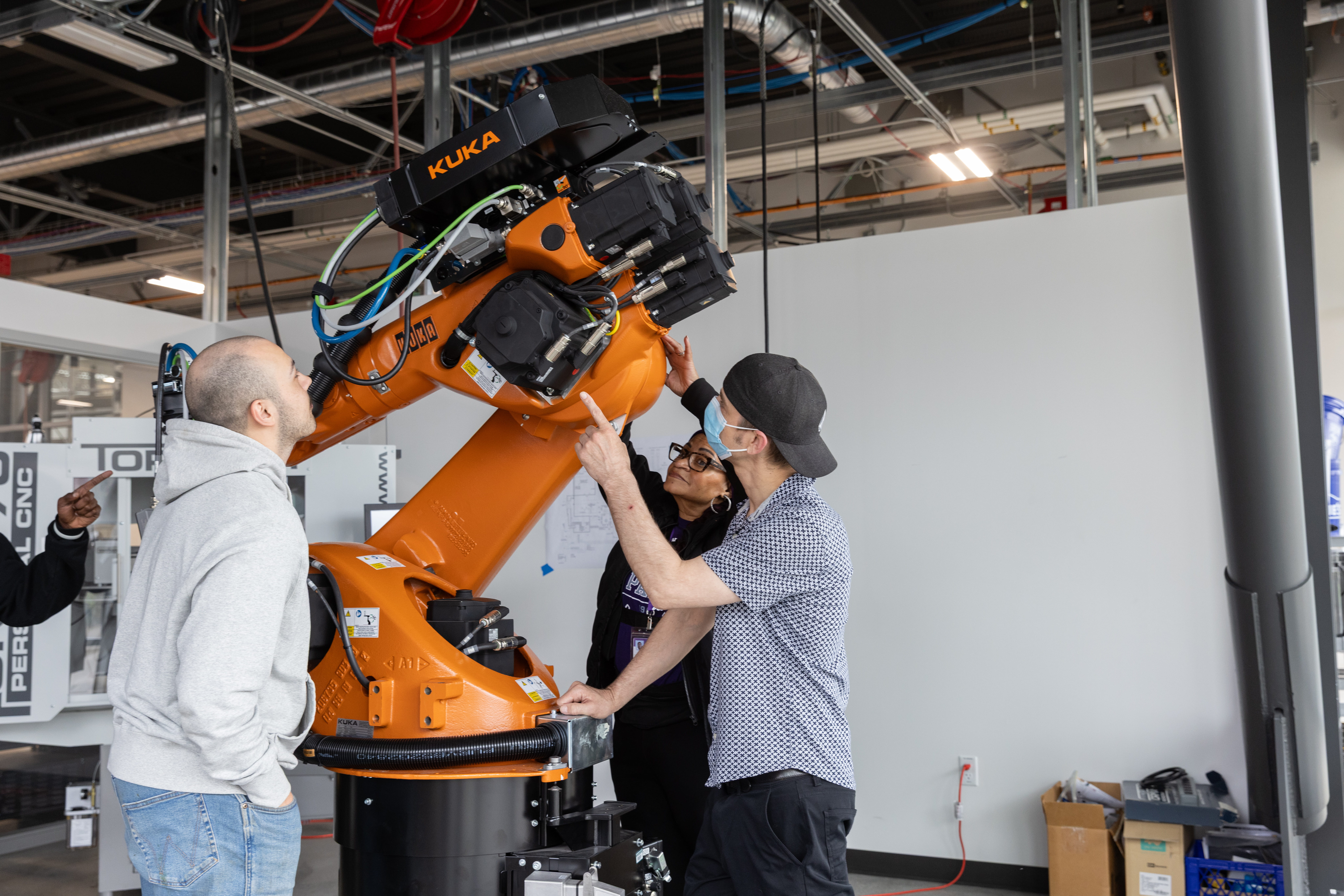
Mechatronics Engineering Technology and Automation
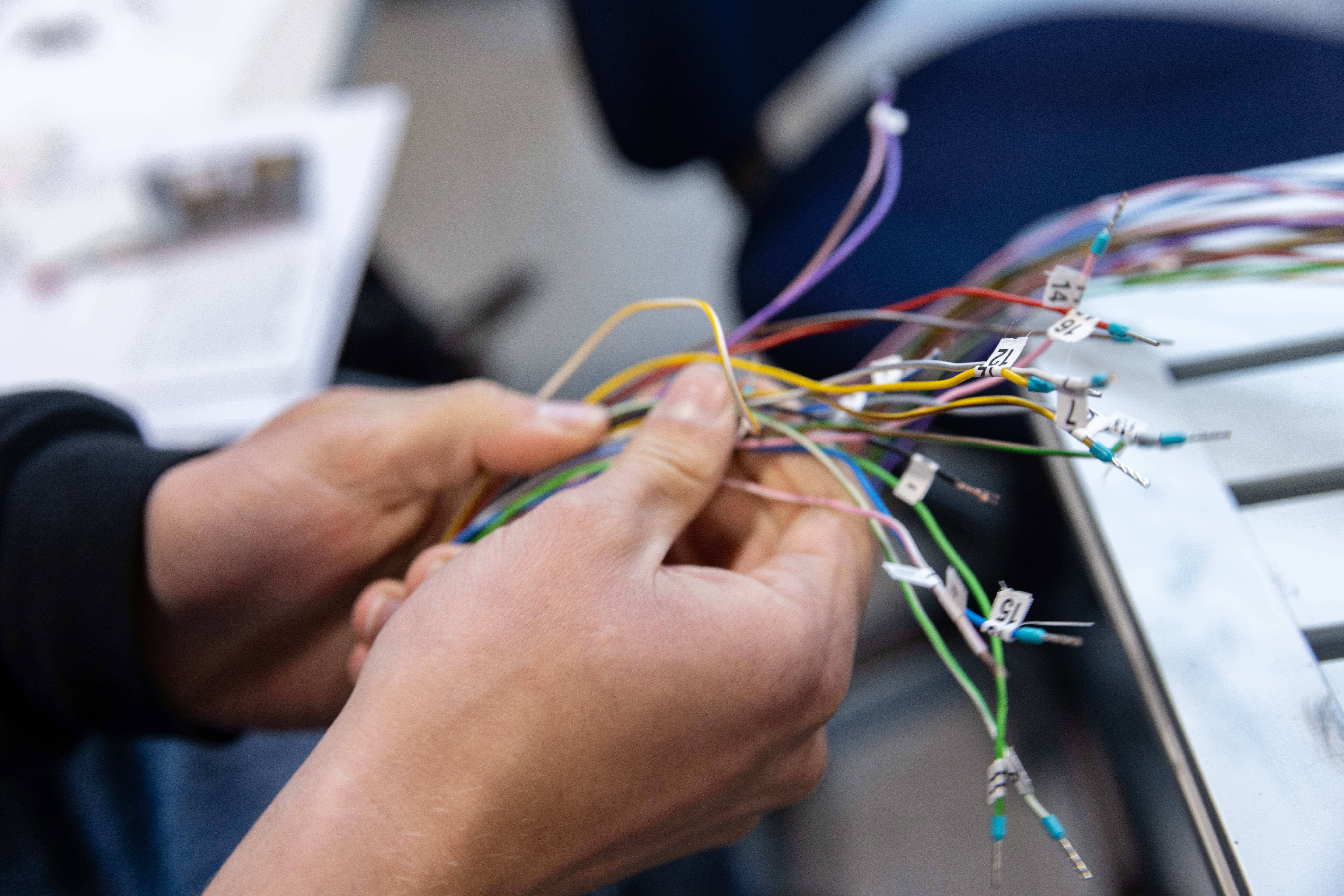
The Mechatronics lab is an integrated automation environment where mechanical systems, electrical components, sensors, and control systems come together. Students work with programmable logic controllers (PLCs), robotics, motor drives, and automated production trainers to build and troubleshoot systems that sense, decide, and act. The lab is designed to simulate real industrial automation systems, helping students understand how machines behave within a larger connected process.

.jpg)
.jpg)
.jpg)
.jpg)
.jpg)
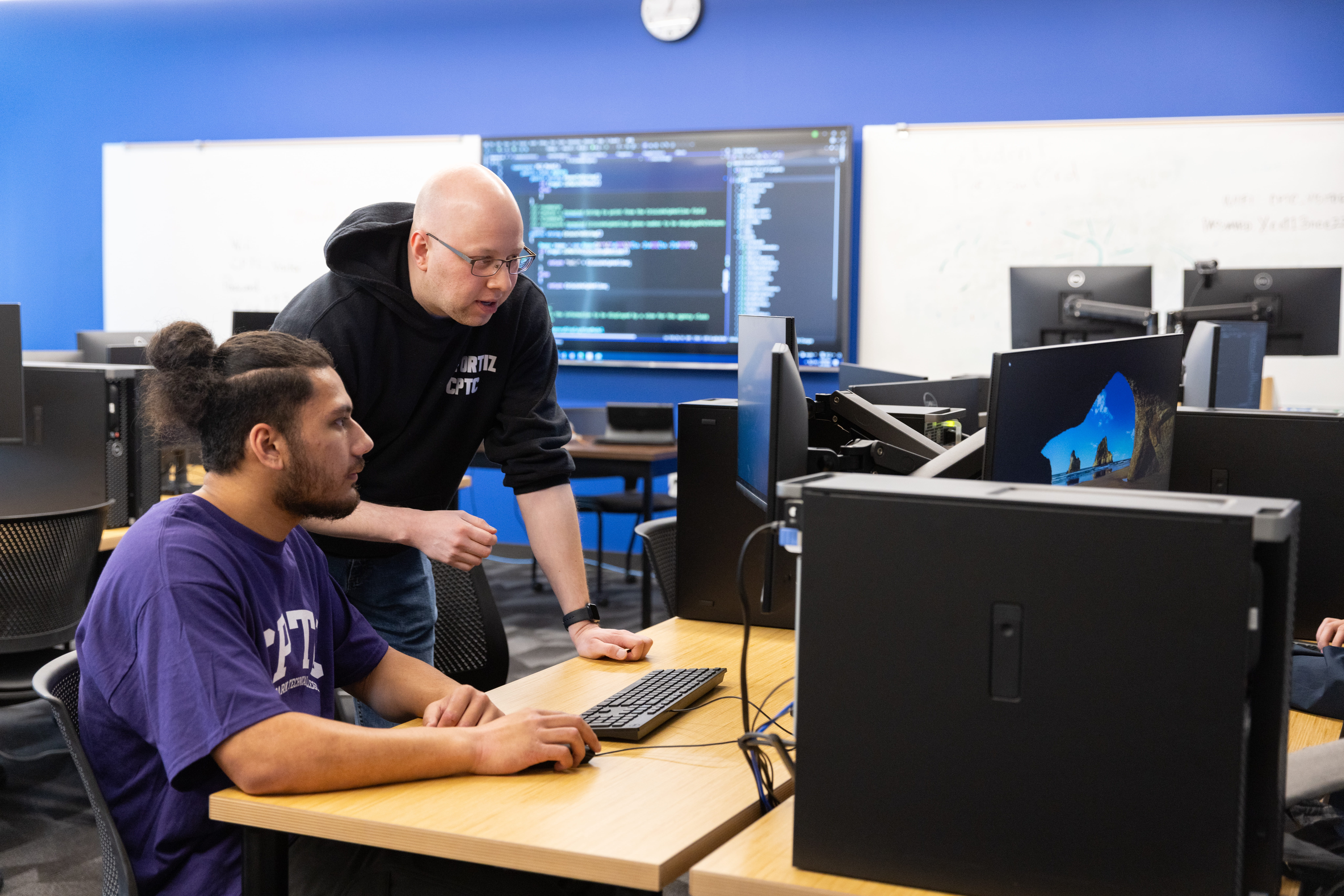
Computer Programming / Cyber-Physical Software Engineering
The Computer Programming lab is a digital and hands-on development environment where students design, test, and deploy software that often supports cyber-physical systems. Lab workstations support software engineering by providing industry standard tools, hardware resources, and a collaborative learning environment for students.

.jpg)
.jpg)
.jpg)
.jpg)
.jpg)
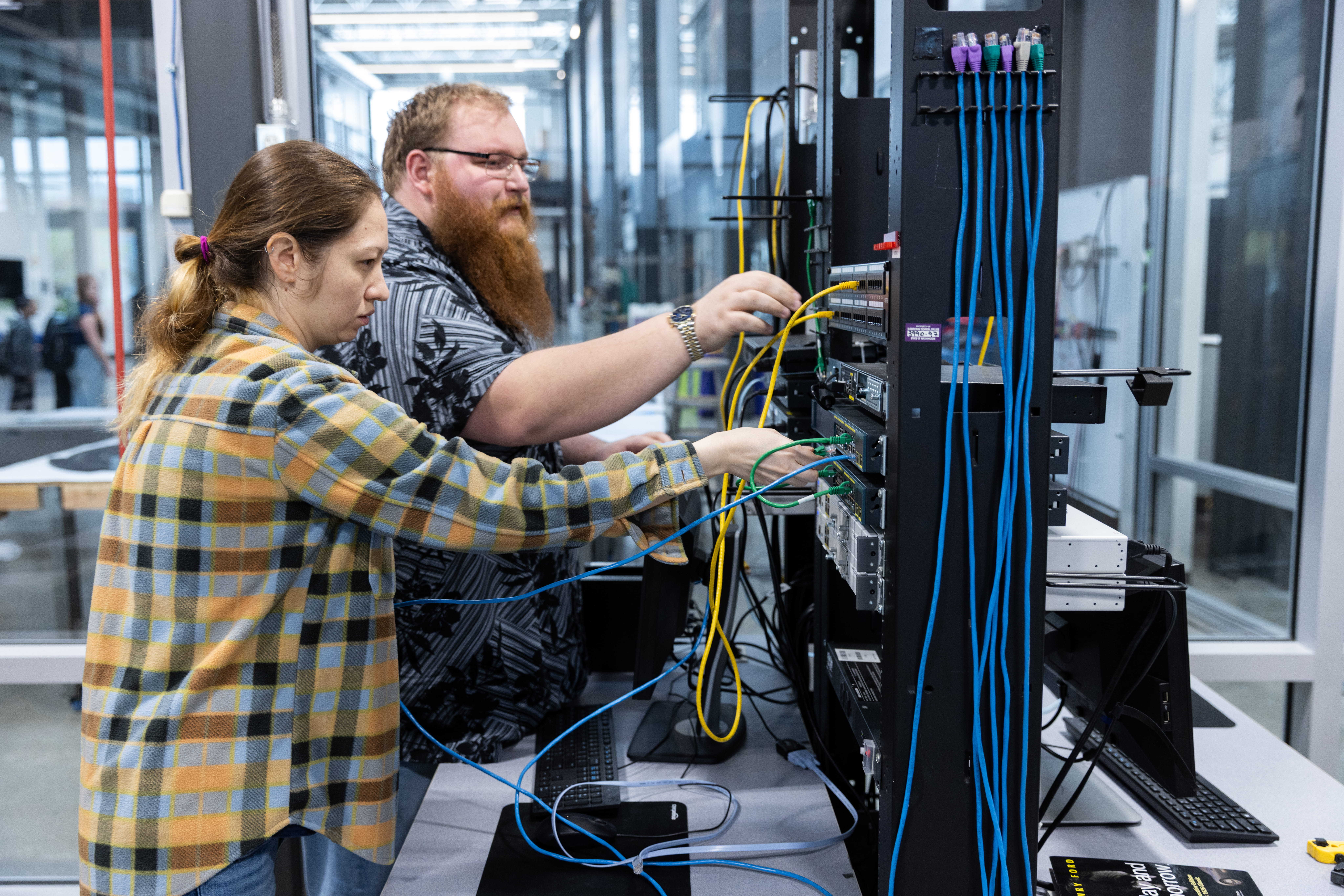
Network Operations & Systems Security / Cyber Security
The Network Operations and Systems Security lab is a simulated network environment where students build, configure, and secure connected systems. Using switches, routers, servers, and virtualized environments, students practice managing data flow, monitoring network performance, and defending systems against cyber threats. The lab allows students to test real-world scenarios safely, reinforcing how connectivity enables and risks modern manufacturing systems.

.jpg)
.jpg)
.jpg)
.jpg)
.jpg)
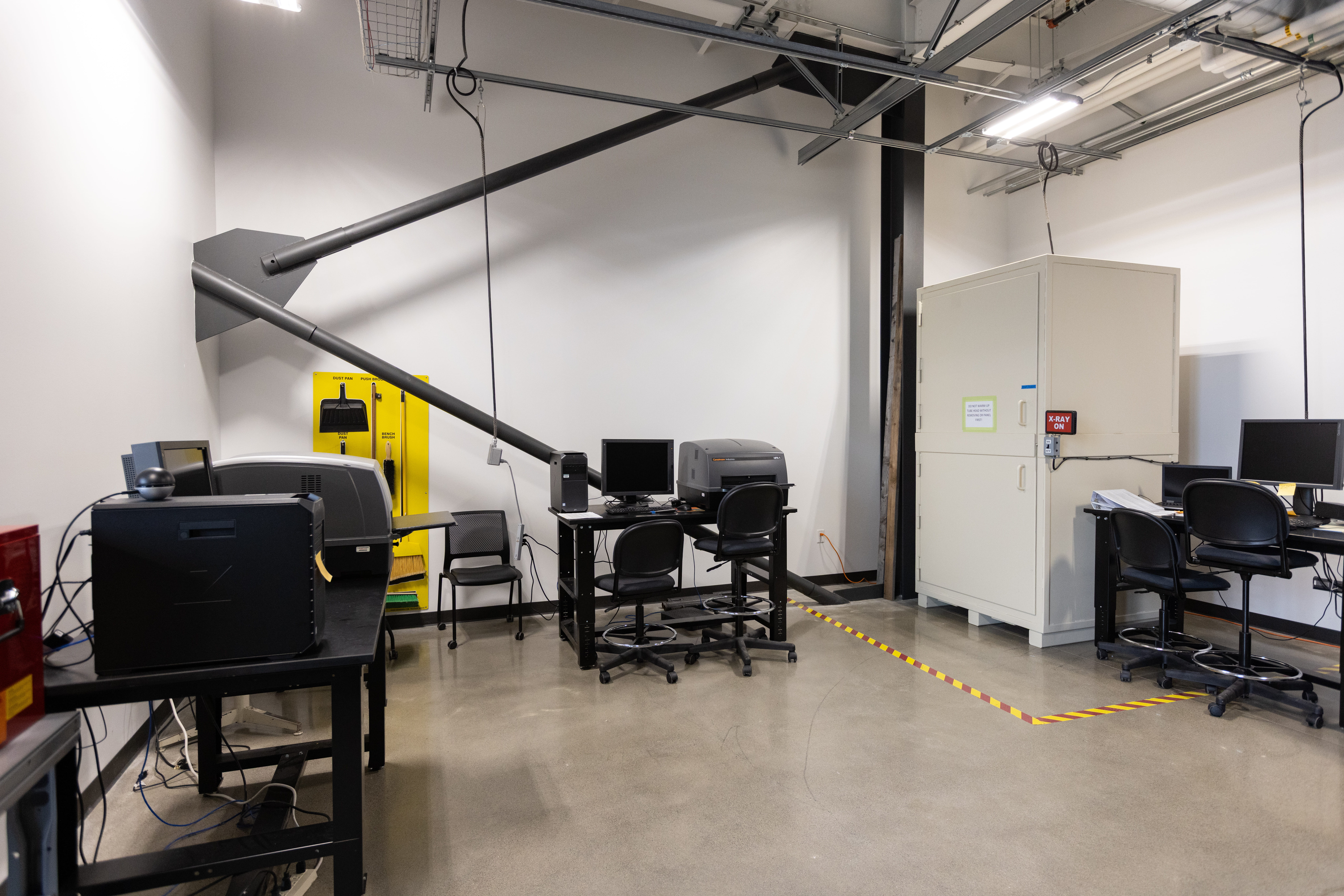
Nondestructive Testing
The Nondestructive Testing lab is a specialized inspection environment where students evaluate materials and industrial components externally and internally without causing damage. The lab covers traditional techniques as well as cutting-edge methods, providing students with comprehensive exposure to all major inspection practices used in the industry. Using Ultrasonic Testing, Eddy Current Testing, Radiographic (X-ray) Testing, Magnetic Particle, and Penetrant Testing equipment, students learn how to detect internal and surface flaws and verify material integrity. This lab reflects real industry practice, where inspection provides the evidence needed to ensure safety, reliability, and quality across critical systems. Students are also exposed to welding, blueprint reading, Composite and intermediate Metallurgy.

.jpg)
.jpg)
.jpg)
Operations Management
The Operations Management environment is a flexible, applied learning space where students analyze production systems, workflows, and organizational performance. Using real-world scenarios, data sets, and cross-program collaboration, students examine how decisions impact scheduling, quality, cost, and delivery. This space connects directly to the labs, allowing students to see how technical work translates into business outcomes and operational success. Developing business plans based on real world scenarios, developing products and services to match customer needs.
Explore CAM-T Programs
Take the Next Step
For Employers
Partner with CAM-T to help shape the future manufacturing workforce.
Read more about us
Visit CAM-T
Building 24 — Center for Advanced Manufacturing
4500 Steilacoom Blvd SW #24
Lakewood, WA 98499